
Air Jordan Kicks Head-to-Head: High-Top vs Low-Top Silhouettes
Selecting between high-top and low-top Air Jordan shoes is one of the most widespread dilemmas encountered by sneakerheads in 2026. Both constructions hold decades of basketball heritage and streetwear clout, yet they serve clearly different roles on and off the basketball court. High-tops shaped Michael Jordan's career, offering the ankle stability that enabled him rule the NBA through six championship campaigns. Low-top models, on the other hand, developed into a fashion-oriented variant that prioritizes range of motion and warm-weather versatility. Learning the actual differences between these two constructions can prevent buyer's remorse and enable you to create a more diverse collection. In this breakdown, we break down athletic performance, comfort, aesthetics, and pricing so you can form a confident decision on your newest pair of Air Jordans.
The Background Behind Both Cuts
When Peter Moore created the debut Air Jordan 1 in 1985, the high-top build was the unquestioned norm for basketball footwear. The high collar hugged Michael Jordan's ankle and grew into an legendary design feature that Nike promoted intensely during the "Banned" campaign. It was not until the Air Jordan 11 Low appeared in 1996 that Jordan Brand truly ventured into the low-cut design for a mainline shoe. That debut confirmed that buyers would embrace a reduced version of an already beloved shoe, opening the floodgates for low-cut editions of nearly every mainline Jordan. By the mid-2000s, low-top Jordans had turned into a warm-weather essential, consistently depleting alongside their high-cut siblings. As of now in 2026, Jordan Brand drops approximately comparable amounts of high-top and low-top colorways each three months, reflecting symmetrical buyer interest across both cuts.
Ankle Stability and On-Court Performance
High-top Air Jordans extend 2 to 3 inches above the ankle bone, creating a firm jordan shoes collar that restricts ankle rolling during intense cuts, pivots, and jumps. Silhouettes like the Air Jordan 1 High and Air Jordan 12 use foam-padded collars combined with stiff heel cups to lock down the entire foot during competitive play. According to a 2024 report published in the British Journal of Sports Medicine, high-top basketball shoes decreased the rate of sprained ankles by approximately 28 percent compared to low-cut alternatives in casual players. Low-top Jordans, such as the Jordan 1 Low and Jordan 11 Low, sacrifice some of that stability in exchange for a lighter build — typically cutting 50 to 80 grams per shoe. For pick-up players who hoop casual games once or twice a week, that lighter build leads to faster first steps and less fatigue over longer games. The trade-off is real, though: if you have a past ankle problems, a high-top shoe with correct lacing continues to be the more secure option for any on-court activity.
Comfort for All-Day Wear
Away from the hardwood, comfort concerns shift dramatically, and low-top Air Jordans regularly win out. The reduced collar height gets rid of the irritation that high-cut Jordans can generate against the Achilles tendon during prolonged walking. Many owners report that Jordan Lows feel ready after just two or three uses, while high-cut versions may take five to seven sessions before the ankle padding fully conforms. Cushioning technology continues to be identical across both heights — the Air Jordan 1 incorporates the same Air sole unit no matter the height, and the Jordan 11 preserves its full-length Air unit in both variants. Foot temperature is another real-world element: low-top versions provide considerably better breathability around the ankle area, which makes them the ideal choice for warmer months when foot heat becomes an problem. For the cooler seasons or full days of wear, the heat retention provided by a high-top collar can actually benefit you, trapping warmth contained around the ankle.
Style and Outfit Versatility
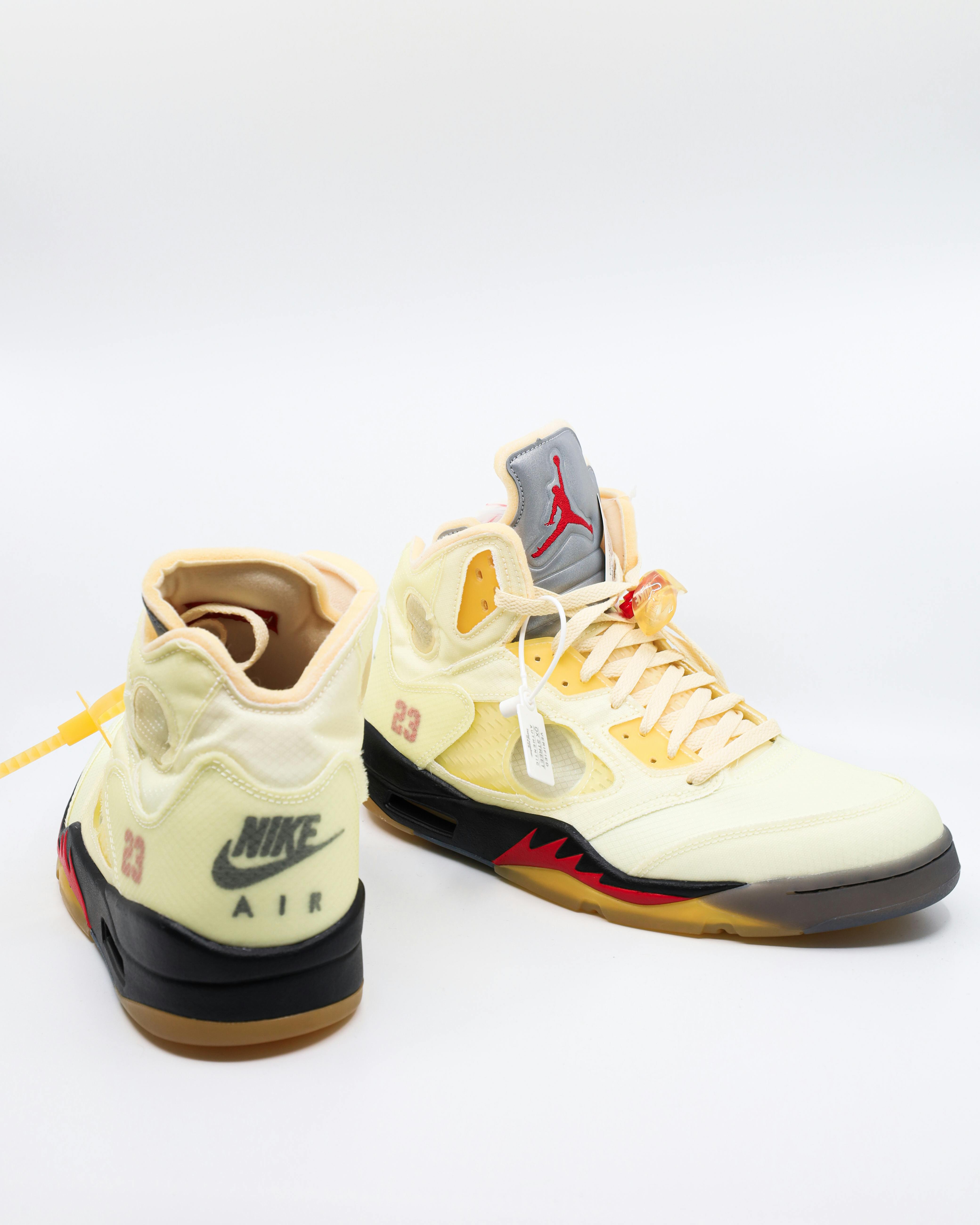
From a aesthetic perspective, high-top Air Jordans attract notice and work as a centerpiece in any fit. The Air Jordan 1 High, in releases like Chicago, Bred, and Royal, perpetually ranks among the most snapped shoes on social media, amassing millions of hashtag mentions on Instagram alone. High-cut Jordans work best alongside slim or tapered pants, track pants, and shorts that permit the full profile to be visible — covering a high-top under baggy denim nullifies its design intent. Low-top Jordans, on the other hand, present a slimmer profile that works naturally with a greater range of fits, including straight-cut jeans, khakis, and even semi-formal pants. Fashion-savvy sneaker enthusiasts in 2026 frequently style low-cut models as a transitional shoe that spans casual and semi-formal wardrobes. The styling flexibility gives low-cut models a slight advantage for sneakerheads who are looking for a lone pair to cover multiple dress codes throughout the week.
Color and Fabric Considerations
High-top Air Jordans usually feature more panel space, which permits designers to add multiple color blocks and complementary materials across the shoe's upper. This extra real estate is why legendary colorways like the Jordan 1 High "Union LA" and "Travis Scott" partnerships feel so design-dense — there is simply more surface area to employ. Low-cut models condense that same design approach into a more compact canvas, which can either appear more refined or feel visually cramped depending on the colorway. Leather, nubuck, suede, and patent leather all show up across both formats, though luxury fabrics tend to feature more regularly in high-cut exclusive releases. In terms of wear resistance, the added construction on a high-top means somewhat greater coverage against scuffs around the ankle region. Sneakerheads committed to preserving their Jordans flawless for years frequently choose high-tops for this functional reason alone.
High-Top vs Low-Top: Full Comparison
| Feature | High-Top Air Jordans | Low-Top Air Jordans |
|---|---|---|
| Ankle Stability | Outstanding — covers above the ankle | Minimal — sits below ankle |
| Typical Weight | 400–500 g per shoe | 340–420 g per shoe |
| Ideal Season | Fall / Winter | Spring / Summer |
| Fashion Versatility | Streetwear, sporty | Streetwear, casual, smart-casual |
| Time to Break In | 5–7 wears | 2–3 wears |
| Resale Markup | Generally higher | Average |
| Airflow | Average | Strong |
| Average Retail Price | $170–$200 | $130–$170 |
Resale Value and Collectibility
In the resale market, high-top Air Jordans have traditionally attracted greater price premiums than their low-cut counterparts. Market data from StockX indicates that the Air Jordan 1 High OG averages a 40 to 60 percent increase over MSRP in desirable releases, while the Jordan 1 Low OG usually records a 15 to 30 percent premium. Exclusive high-tops, particularly those tied to collabs with designers like Virgil Abloh or Travis Scott, have achieved secondary market prices above $2,000 in unworn condition. Low-tops are increasingly close that gap, however, as Jordan Brand focuses more intensely in premium low-top launches geared toward fashion-focused buyers. The Travis Scott x Air Jordan 1 Low Reverse Mocha, for instance, commanded significantly above $1,500 on secondary markets throughout 2023 and 2024. For collectors interested in future appreciation, high-tops persist as the more secure investment, but the low-top market is evolving quickly and should not be overlooked.
What Should You Buy?
Your decision when it comes down to it hinges on how and where you expect to wear your Air Jordans. If playing ability is a priority — even casually — the support benefits of a high-top are impossible to overlook, and the additional ankle support can prevent ankle injuries that would bench you for weeks. For everyday wear across multiple contexts, a low-top Air Jordan gives superior adaptability, a lighter build, and an easier break-in experience that fits right into a fast-paced lifestyle. Value-minded sneakerheads will also appreciate that low-cut models commonly sell for $20 to $40 cheaper than their high-top counterparts, expanding your footwear budget further. Ideally, a diverse rotation includes at least one of each: a high-top for statement dressing and fall and winter, and a low-top for laid-back spring and summer styling. Review your present clothing collection, evaluate your physical activity, and weigh your local climate before deciding. Whichever cut you pick, you are buying into a silhouette supported by over 40 years of design innovation from Jordan Brand.
Final Verdict
The high-top versus low-top debate has no definitive answer because both cuts thrive in separate situations. High-top Air Jordans offer superior ankle support, stronger resale markups, and a more commanding visual presence that commands sneaker photography and sneaker conventions. Low-top Air Jordans respond with lighter construction, quicker break-in times, wider wardrobe flexibility, and a more budget-friendly price point for beginning sneakerheads. In 2026, Jordan Brand persists in push boundaries across both styles, rolling out new cushioning systems and sustainable materials that improve both options year over year. The wisest strategy is to judge each drop on its individual strengths rather than enforcing a blanket preference for one format over the other. Whether you rock high-tops for a weekend convention or slip into lows for a backyard BBQ, the Jumpman logo on your foot holds the same storied weight.
